Why peptides are freeze-dried
Peptides break down over time through oxidation, hydrolysis and aggregation — processes that speed up in water and heat. Lyophilization (freeze-drying) removes the water, leaving a stable powder or “cake” that tolerates shipping and storage far better than a solution.
Temperature
| Situation | Common lab practice |
|---|---|
| Long-term storage (sealed) | −20 °C or colder |
| Short-term storage (sealed) | 2–8 °C refrigerator |
| During shipping | Room temperature for a few days is normal for lyophilized material |
| After reconstitution | 2–8 °C, used promptly per the compound’s datasheet |
Short domestic transit is one reason buying from a Canadian supplier matters: less time in uncontrolled conditions than weeks of international shipping.
Moisture and light
- Let the vial reach room temperature before opening. Opening a cold vial pulls condensation onto the powder.
- Keep vials sealed until use, and store them with a desiccant if possible.
- Protect from light — store vials in their box or an opaque container.
Avoid repeated freeze-thaw
Each freeze-thaw cycle can damage peptides in solution. If a reconstituted peptide must be frozen, labs typically divide it into single-use aliquots first so each portion is thawed only once.
Bacteriostatic water vs sterile water
Researchers reconstitute lyophilized peptides with a suitable solvent, chosen from the compound’s datasheet:
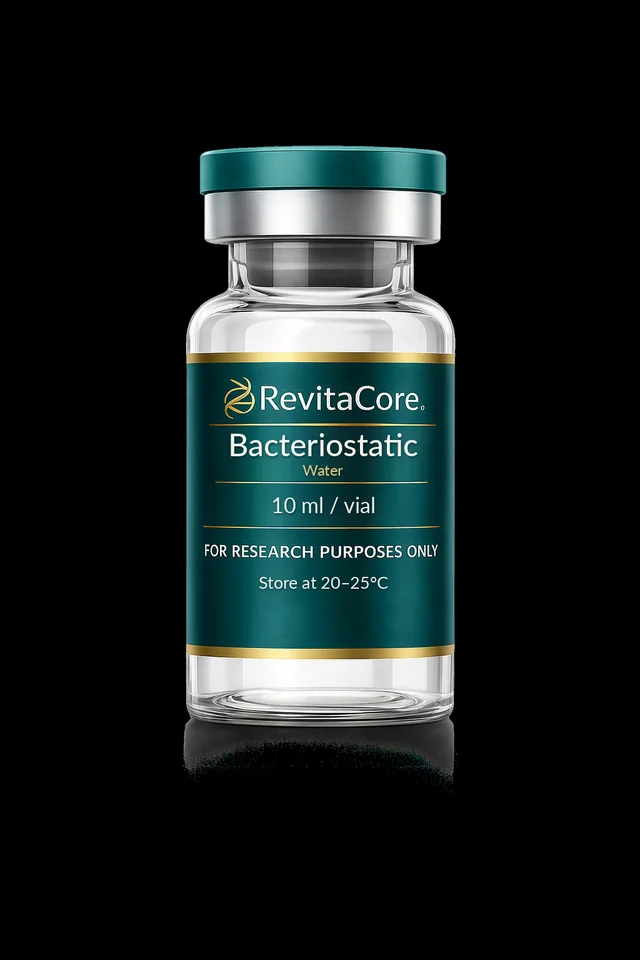
- Bacteriostatic water is sterile water with 0.9% benzyl alcohol, which inhibits bacterial growth so a vial can be accessed more than once.
- Sterile water has no preservative and is intended for single use.
- A few peptides are better dissolved in a dilute acid or other solvent — always follow the supplier’s datasheet for that compound.
Every RevitaCore order includes a free 10 ml vial of bacteriostatic water.
Clean technique
Wipe septa with alcohol, use sterile equipment, add solvent slowly down the side of the vial and swirl gently rather than shaking — vigorous shaking can denature some peptides. Label every vial with the compound, concentration and date.
Frequently asked questions
Do lyophilized peptides need to be refrigerated during shipping?
No. Sealed lyophilized peptides tolerate room temperature for short periods. Store them cold once they arrive.
What is the difference between bacteriostatic and sterile water?
Bacteriostatic water contains 0.9% benzyl alcohol to inhibit bacterial growth in multi-use vials; sterile water has no preservative and is single-use.
How long do lyophilized peptides last?
Stored sealed at −20 °C and protected from light and moisture, lyophilized peptides generally stay stable for long periods; check the datasheet for each compound.