The three hormones behind the research
Much of today’s metabolic peptide research revolves around three naturally occurring hormones:
- GLP-1 (glucagon-like peptide-1), released by intestinal L-cells after eating.
- GIP (glucose-dependent insulinotropic polypeptide), released by intestinal K-cells.
- Glucagon, released by pancreatic alpha cells.
Native GLP-1 and GIP break down within minutes, so researchers developed long-acting synthetic analogues — and then single molecules that activate two or three of these receptors at once.
At a glance
| Compound | Receptors targeted | Type |
|---|---|---|
| Semaglutide | GLP-1 | Single agonist |
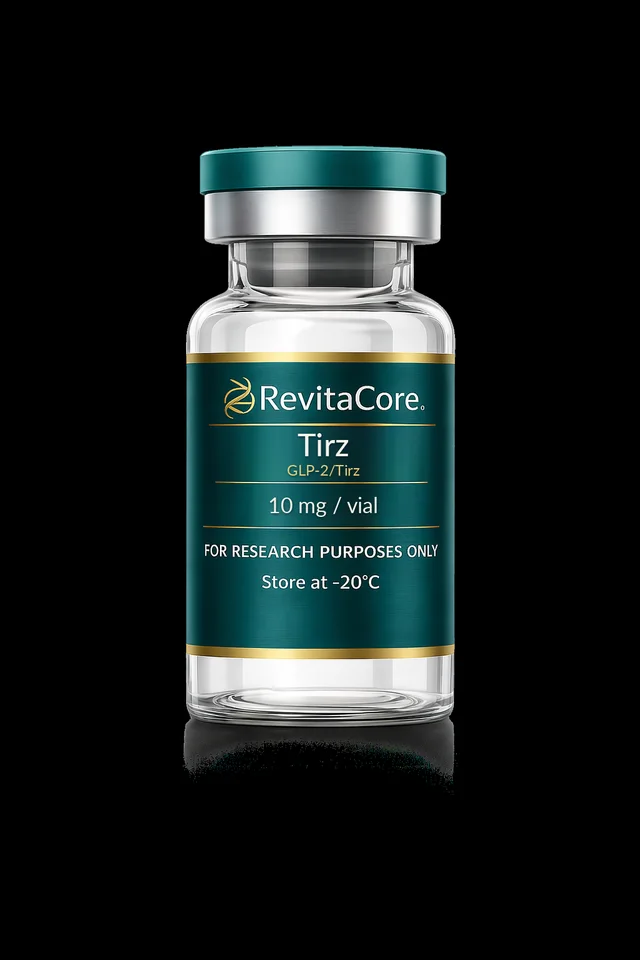
| Tirz (GLP-2/Tirz) — tirzepatide | GIP + GLP-1 | Dual agonist |
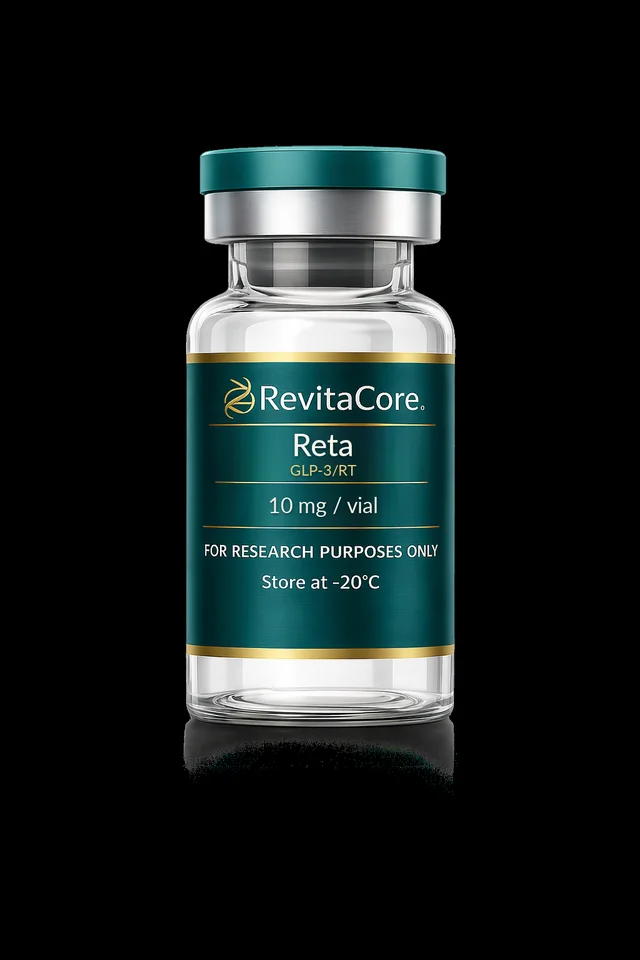
| Reta (GLP-3/RT) — retatrutide | GLP-1 + GIP + glucagon | Triple agonist |
| Cagrilintide | Amylin / calcitonin receptors | Amylin analogue |
Semaglutide: the GLP-1 benchmark
Semaglutide is a GLP-1 analogue with amino-acid changes that resist enzymatic breakdown and a fatty-acid side chain that binds albumin in the blood, extending its half-life to roughly a week. It is widely used as the reference GLP-1 receptor agonist when newer compounds are compared.
Tirzepatide (Tirz): two receptors in one molecule
Tirzepatide is a 39-amino-acid peptide built on a GIP-based sequence that activates both the GIP and GLP-1 receptors — often called a “twincretin”. Research interest centres on how adding GIP receptor activity changes the profile compared with GLP-1 alone. On our site it is listed as Tirz (GLP-2/Tirz).
Retatrutide (Reta): adding glucagon
Retatrutide (LY3437943) goes a step further, activating the GLP-1, GIP and glucagon receptors. Glucagon receptor activity is studied for its effects on energy expenditure and liver fat metabolism, which is why the triple-agonist approach has drawn so much research attention. Retatrutide remains investigational and is being evaluated in late-stage clinical trials. On our site it is listed as Reta (GLP-3/RT).
Where cagrilintide fits
Cagrilintide works through a different system: it is a long-acting analogue of amylin, a hormone released with insulin. Because it acts on different receptors, it is frequently studied alongside GLP-1 agonists to compare and combine mechanisms. See Cagrilintide 10 mg.
Regulatory status
Semaglutide and tirzepatide are the active ingredients in prescription medicines approved in Canada; retatrutide is investigational. RevitaCore’s compounds are research materials only — they are not those medicines, are not approved by Health Canada for human use, and must not be used in humans or animals.
Frequently asked questions
What is the difference between a GLP-1 agonist and a dual agonist?
A GLP-1 agonist such as semaglutide activates only the GLP-1 receptor; a dual agonist such as tirzepatide activates both the GIP and GLP-1 receptors.
What does GLP-3 mean?
“GLP-3” is an informal nickname for retatrutide, referring to its three receptor targets (GLP-1, GIP and glucagon). It is not a separate hormone.
Is retatrutide approved?
No. Retatrutide is an investigational compound and is not approved by Health Canada.